

Challenge
Google launches new campaign types faster than most businesses can evaluate them and Performance Max (PMax) is one of the most confusing. It promises full reach across Google’s platforms, from Search to Maps to Display. But when you peel back the layers, something becomes very clear: PMax campaigns can inflate performance, mislead reporting, and send your budget into the wrong places especially when you need qualified leads.
Insight
1. The PMax Problem Begins With Display
PMax automatically decides where your ads appear. When Google thinks Display placements are “working,” it pushes even more budget there. The Display Network is flooded with low-quality websites using bots to generate fake ad clicks and fake form submissions. These bots are advanced enough to:
- Click your ads
- Fill out your forms
- Submit “leads” that look almost legitimate at first glance
Advertisers globally report patterns like:
- Common first names
- Generic surnames
- Email addresses with random number strings
- Repeated submissions at predictable times
Many report that 20-30% of Display leads are fake. And because PMax counts every click as a “conversion,” even someone pressing X to close the ad can make Google think it found a good lead source.
2. The Negative Feedback Loop
Google’s Smart Bidding sees those fake conversions and thinks: “Great! This placement performs, let’s put MORE budget there.”
So PMax:
- Pumps more money into those same fraudulent Display sites
- Generates even more fake leads
- Pulls budget AWAY from accurate channels like Search and Maps
Your reports go up, but your real-world results go down. This is why PMax conversions look impressive, but sales teams don’t feel the improvement.
Solution
At BaseCloud, our job is to cut through inaccurate automation and make sure clients get real results. Google prioritises its own systems. We prioritise accuracy, intent, and growth.
Our Core Approach
| Campaign Type | Best For | BaseCloud Approach |
| Search Ads | Leads for service-based businesses | 100% phrase match, never broad match. Broad match wastes money. |
| Sales Campaigns | E-commerce | Clean, measurable ROI. |
| Website Traffic Campaigns | New websites | Build visibility + audience data. |
| Local Campaigns | Physical locations | Boosts Google Business Profile traffic + Maps visibility. |
| App Promotion | App-based businesses | Used selectively. |
We favour Search first because it is the most controlled, most accurate, and least vulnerable to fraudulent networks.
Where PMax Can Work and Where It Can’t
PMax is not redundant; it’s just misunderstood.
PMax Works For:
- Brand awareness
- Store visits tied to your Google My Business
- Cheap broad visibility
But Fails At:
- Accurate lead generation
- High-intent conversion campaigns
- Anything requiring clean data
Because you cannot switch off Display inside PMax, you cannot stop it from:
- Sending budget into bad placements
- Counting bad clicks as conversions
- Learning from spam
This is why expert monitoring matters.
Real Example: A Plumbing Business
We tested two PMax objectives side by side:
- One focused on Leads
- One focused on Store Visits
Here’s what we found:
When PMax was set to Leads:
- Majority of spend went to the Display arm
- Conversions were inflated and unreliable
- High impressions, low meaningful value
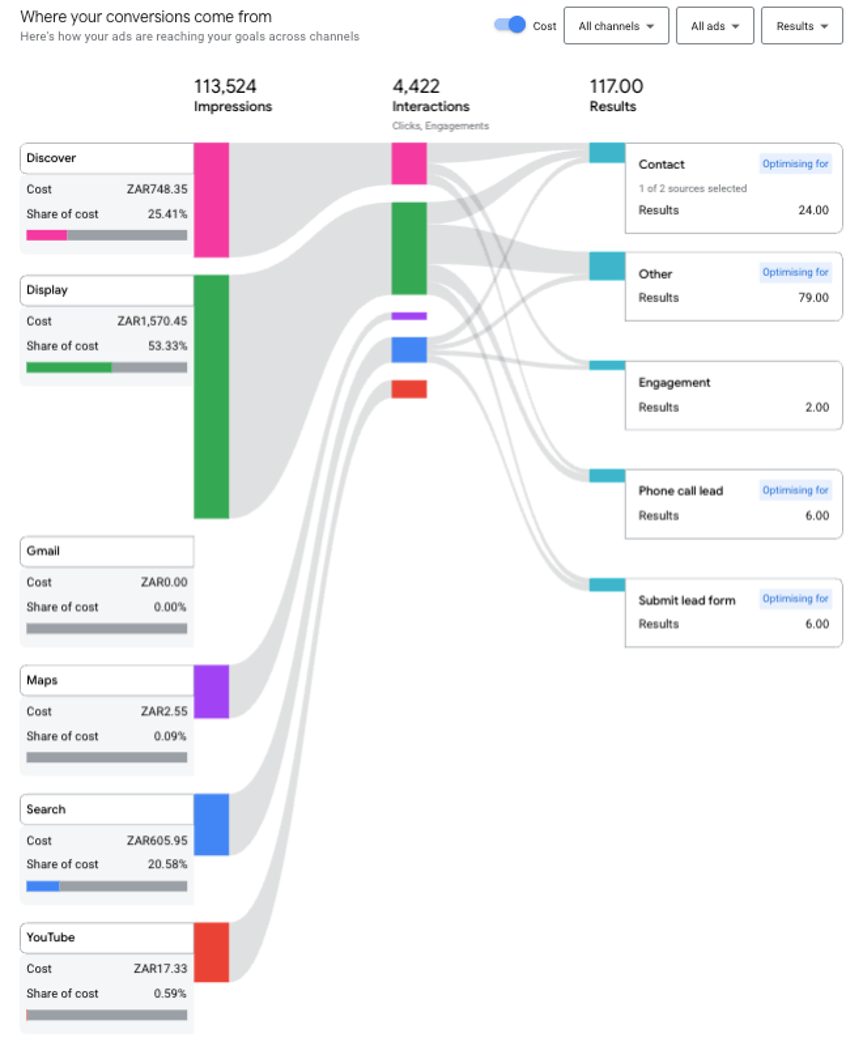
When we switched to Store Visits:
- Spend shifted to trusted channels like Search and Maps
- Interactions dropped (because bots don’t walk into stores), but quality shot up
- Report accuracy improved instantly
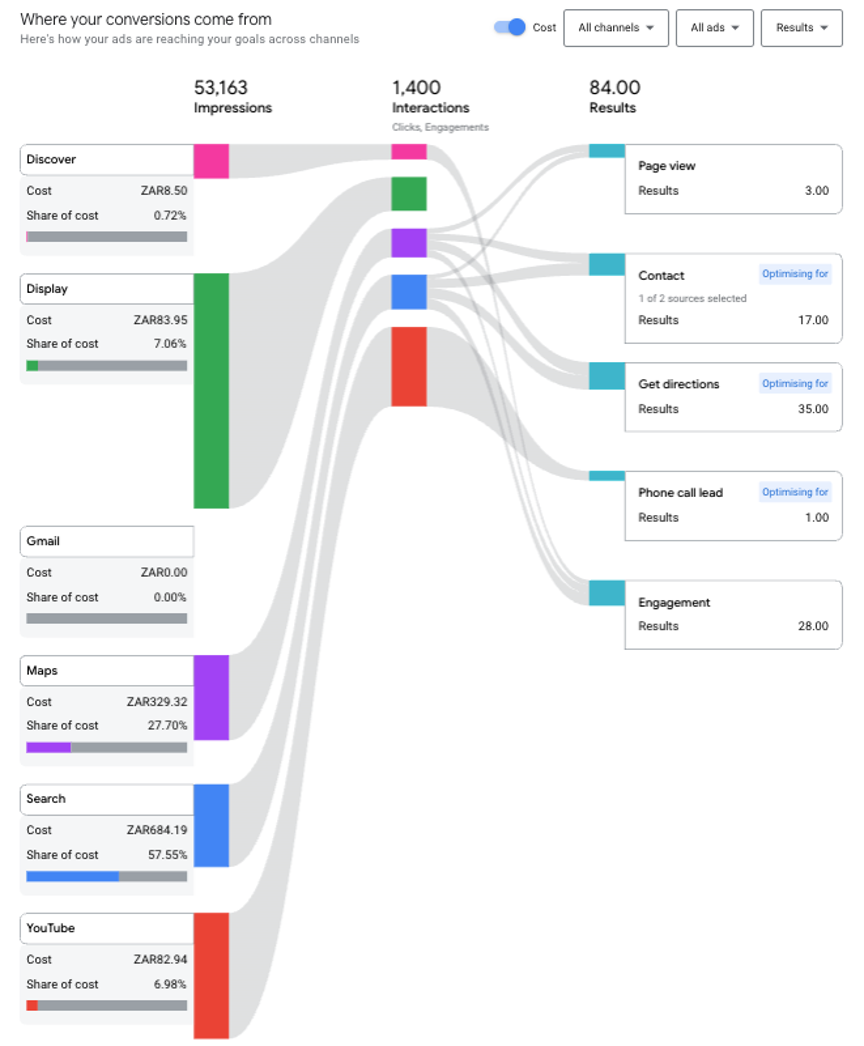
This reinforced what our experts already knew: PMax only behaves optimally when it has the right goal — and even then, it must be monitored closely.
Our Standard Practice
- We allocate only a small portion of total budget to PMax
- We use it only when needed
- We set it to Store Visits, not Leads
- And we track channel performance weekly to stop misallocated spend early
PMax can be beneficial — but it is volatile, unpredictable, and absolutely not a “set it and forget it” tool.
Results
After shifting away from PMax-driven lead goals and back to Search-first campaigns:
- Fake leads dropped dramatically
- Lead quality improved
- Reports became accurate again
- Budgets were reallocated to reliable, high-performing channels
- Clients saw real enquiries instead of inflated dashboards


